Jackson Alone - Reading in Translation
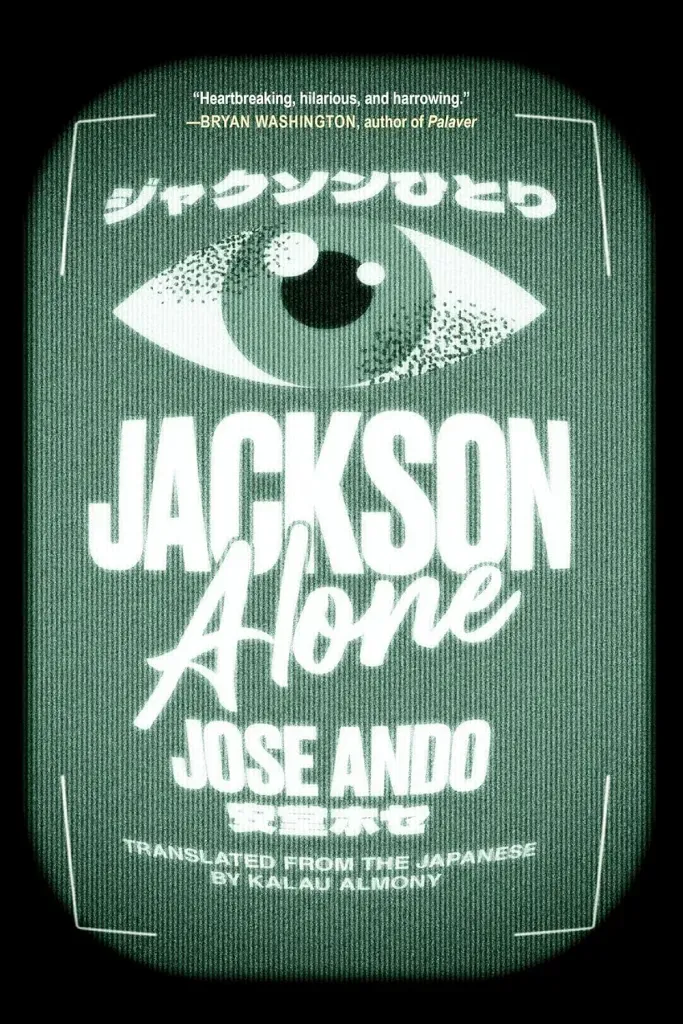
Jackson Alone by Jose Ando
This post started out very differently. At first I was fairly critical of the writing style, unsure if it was due to poor writing or poor translation that it wasn't speaking to me, or perhaps a cultural difference that was evading me. Then, as I worked through my thoughts, an epiphany hit me like a comically large ACME anvil dropped from a great height. THAT'S THE POINT!! I got it!! I was going to backspace the entire thing, but I stopped. I decided that I'd let you all see the cogs working as my little reptile brain finally fired the correct neurons or whatever and latched onto what the author was trying to convey.
Last week I listened to the audio book of Every Day I Read, by Korean author Hwang Bo-Reum, ironically a book in translation itself. I say ironically, because the author mentions dozens of books written by non-Korean authors and then comments that she doesn't particularly enjoy reading translated works, or at least is extremely picky about which ones she reads.
This portion of Bo-Reum's book was present in my mind as I began to read Ando Jose's Jackson Alone, a satirical novelette that comments on the experience of existing in Japan as a queer, black, mixed race man.
As a disclaimer: I am a white, queer, American woman who was raised in liberal Southern California. I don't have fluency in any other languages than English, although I grew up hearing different languages from around the world being spoken frequently, have travelled outside the country a handful of times, and grew up with friends and neighbors of all different races, nationalities, cultures, etc. This is all to say that while I have been lucky enough to have exposure to diversity that many others haven't enjoyed, I am still at the end of the day a white dyke who don't speak no languages1.
Every Japanese novel I have read has then obviously been a translation. This includes three Natsuo Kirino novels, a Banana Yoshimoto, two Murakamis, everything Marie Kondo has written, and a handful of chapters from The Tale of Genji. (We will leave out the countless manga I read in my teenage and young adult years for this particular conversation.) Many (not all) of the novels share a style of simplicity, expressing even complex ideas in carefully considered, sparse, almost blunt prose. There isn't a lot of excess description, and when there is description, it is short but impactful and poetic.
Jackson Alone definitely utilizes this style of sparse prose, but I'm not certain it's a good thing. And because I am not reading in the original language and don't have the ability to, I can't tell if that's the point, if it's some failing on the part of the author or translator, or if I am just not catching onto a cultural style of writing. The perspective often shifts from one character to another in the middle of a scene, often multiple times, using such short, bare sentences that it all seemed very quick and confusing.
In the background, you should be hearing that tell-tale whistle, starting faint and far away and slowly growing closer and louder.
CLANG.
Duh.
That's the whole fucking point.
The entire premise of the book is that a queer, mixed race black Japanese man stumbles across a weird revenge-porn-esque video that seems to depict himself, or at least someone who looks incredibly like him. He meets three other men who look exactly like him, all linked somehow by this pornographic video that none of them remember being involved with. They look so much alike that even they are shocked by it, and use the likeness to play pranks on people who have hurt them, and ultimately to track down the person who made the video.
So the abrupt shifts in perspective make perfect sense, serving to confuse the reader and mimic the idea that "all XYZ people look the same." The story further enforces this idea as the four men effortlessly assume each other's identities throughout the course of their pranks. During the course of these pranks, the author touches on issues like immigration, unhealthy queer relationships, and racist profiling by both civilians and police.
We see how Jackson's boss concludes that black people are naturally subservient. He believes that he is somehow owed Jackson's emotional labor, internally demanding the performance of an emotional response, for Jackson to prove his humanity in order for the complaint of an injustice to be taken seriously.
Another character goes so far as to catalogue the physical appearance of one of the men upon feeling his masculinity somehow threatened by the presence of a black man at the gym. He stares at him in the showers and reassures himself like some phrenologist weirdo that all the hallmark qualities of an inferior being are present in this black man.
Of course, by the end of the book, I am confused as shit again. Without spoiling it, I can only say that it was Kafkaesque in that uniquely Japanese way that leaves you sitting for a moment before simply uttering, "What?!" I felt a similar confusion while watching Paranoia Agent, and have felt it too in certain Murakami novels. It almost reminded me too, of a scene in the 2001 film Suicide Club where Japanese glam rock god Rolly breaks into song for no apparent reason while a truly nightmarish crime takes place on screen. Though not exactly the same, nor quite so terrible, the end of Jackson Alone retains that "what in the ding dang hell is happening" kind of horrified confusion that temporarily untethers you from reality and makes you question whether you actually get it or not.
I think I get it.
I thought I did.
What this book did fantastically is make me desperate for other people's analysis. It's going to stick in my mind for a while for sure. If you do decide to pick up Jackson Alone, please for the love of god email me your live reactions, or head over to PageBound and record them there. I will have my eyes peeled.
 Image from Soho Press
I don't feel like I can pin down a star rating on this book. But I feel strongly that it is worth a read and even more worth discussing. And I certainly feel that we will see more of Ando Jose's work in the future.
Leave a comment
\\Latest posts
\Disclaimers:
No part of this blog has been created with the use of GenAI or LLMs. No part of this blog may be used to train GenAI or LLMs. Do not contact me with opportunities related to training, editing, or proofing output from GenAI or LLMs. Please see a full list of disclaimers here.
I can speak the most important phrases in Spanish, French, Japanese, and Polish which are as follows: "My name is...", "I would like a beer/cookie", "Where is the bathroom", "I don't speak (LANGUAGE)", "yes/no", "fuck", and "HELP".↩